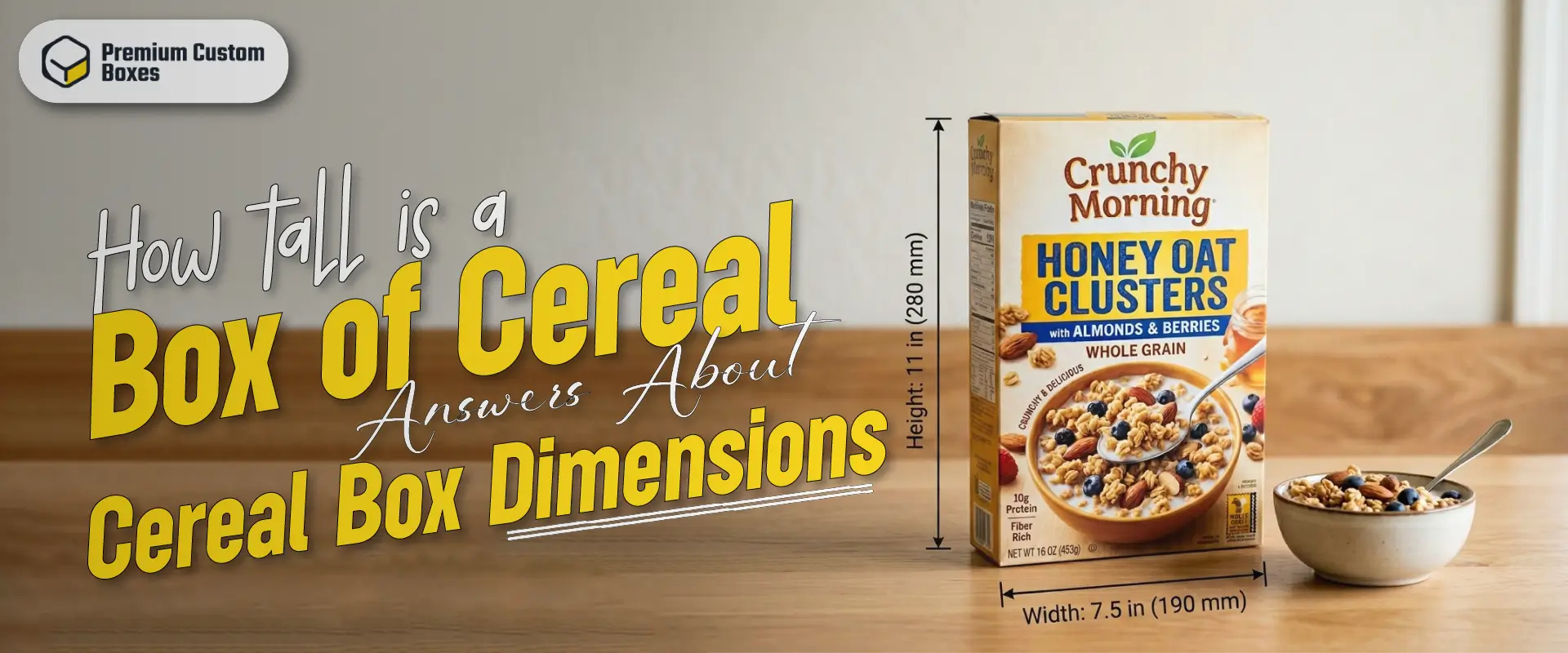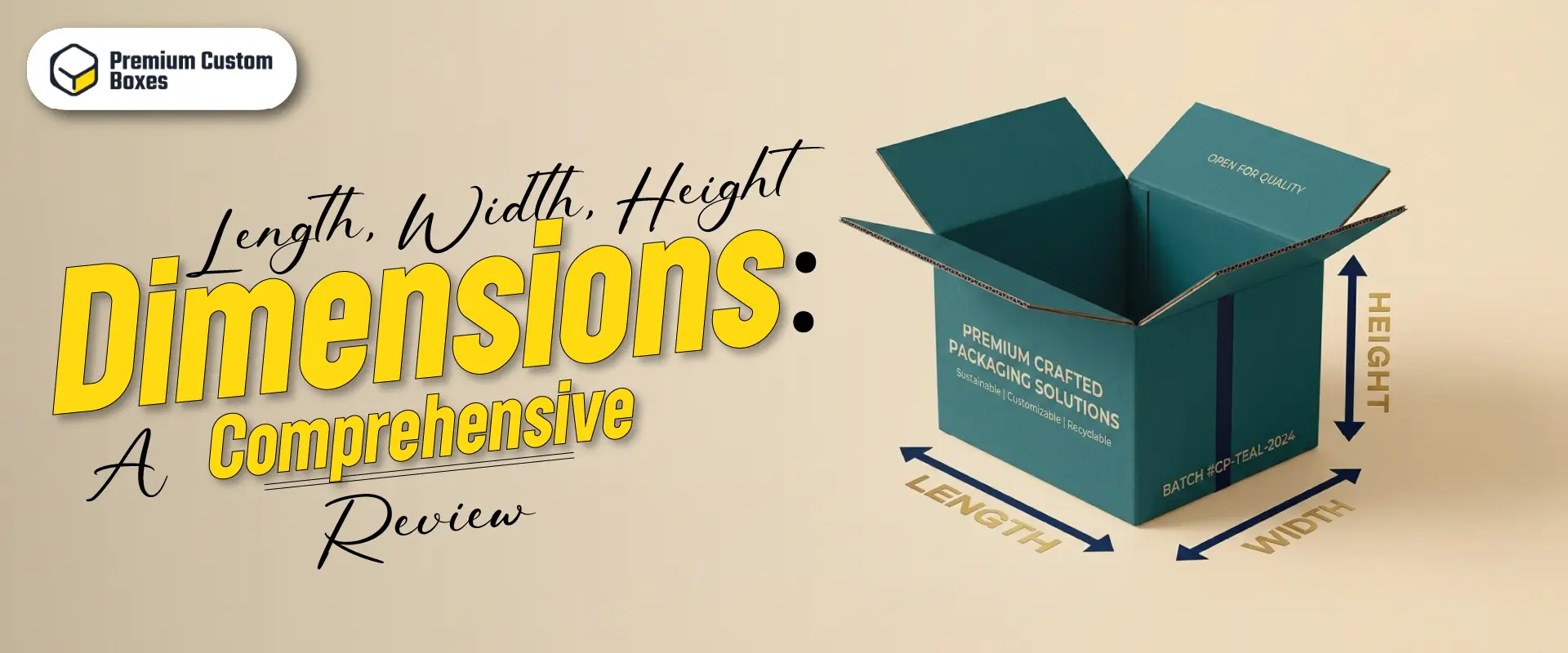

Think about the last thing you bought online. Before it reached your door, it sat in a warehouse, got scanned, packed, and shipped, all inside a box. That box didn’t just appear. It started with three simple numbers, Length, Width, and Height. In packaging, these three numbers are called dimensions, and they are always written in the same order, L x W x H. Length is the longest side, width is the shorter side next to it, and height is how tall the box stands when it’s closed.
These numbers decide everything that comes next. They decide if the product fits snugly inside, without moving around during shipping. They decide if the printed design wraps correctly on every panel, instead of getting cut off. And they decide how many boxes fit on a pallet or in a truck, which affects shipping cost. Getting these three numbers right is the first step of every packaging order, and getting them wrong is where most problems begin. In this guide, we’ll break down what each measurement means, how to measure it correctly, and where most brands make mistakes.
What Length, Width, And Height Mean
Think of a custom box sitting on a table in front of you, ready to be opened. Length is the side stretching left to right across the front. Width is the side going from front to back, into the table. Height is simply how tall the box stands, from the table up to the top edge. This “facing the box” view is how most manufacturers read a spec sheet, which is why the order L x W x H isn’t random; it matches how the box is actually built and printed.
Boxes are described in a fixed order. Always.
- Length is the longest side of the box opening. Usually the front-facing edge.
- Width is the shorter side. It runs perpendicular to the length.
- Height is the vertical dimension. Measured from the bottom of the box to the top edge.
This L x W x H order is the industry standard. Manufacturers build dielines and print templates around this exact sequence. Flip two numbers, and the box comes out shaped wrong. Not damaged. Just wrong, because it was built exactly to spec.
Why Order Matters More Than People Expect
A spec sheet says 4″ x 10″ x 6″. But the customer actually meant 10″ x 4″ x 6″. They just wrote the numbers in the wrong order. The manufacturer doesn’t guess what you meant. They build exactly what’s written on the sheet.
So the box comes out turned 90 degrees from what the customer had in mind. The product doesn’t fit inside anymore. The printed design and label end up on the wrong side. And the entire order has to be scrapped and made again.
This one small mistake, mixing up the order of length and width, is one of the most common errors we see in custom packaging orders. And it’s completely avoidable. Double-checking your numbers before production costs nothing. Fixing it after production costs real time and real money.
Wrong Orientation
A spec sheet mix-up rotates the entire box 90 degrees from what the customer pictured, even though every number was technically followed exactly as written.
Product Misfit
The finished box no longer matches the product it was meant to hold, leaving items loose, crushed, or impossible to package properly for shipping.
Print Misalignment
The design is made for one specific side of the box. If the box is turned the wrong way, the graphics end up sideways instead of in the right spot.
Scrapped Production
Since the box was built exactly to the spec sheet, the entire run gets rejected, forcing a costly reprint and pushing back the delivery timeline.
Measuring A Box The Right Way, Every Time
Wrong box measurements are one of the most common and most avoidable packaging mistakes. A product that looks like it’ll fit perfectly on paper can end up too tight, too loose, or damaged in transit if even one step is measured incorrectly. This isn’t just about grabbing a tape measure; it’s about consistency, so every box order matches every time.
Whether you’re ordering custom boxes for the first time or refining your process, getting this right from the start saves money, reduces returns, and prevents packaging headaches down the line.
Here’s The Exact Order We Walk Customers Through.
- Measure length first. Lay the product flat. Measure its longest front-facing edge.
- Measure width next. Measure the shorter side. It runs perpendicular to length.
- Measure height last. Stand the product upright. Measure from bottom to top.
- Add clearance. Add 0.25″ to 0.5″ per side. Skip this only if a snug fit is intentional, like for cushioning.
If you skip this clearance step, the product may not fit properly, even if the box measurements look correct on paper.
Internal vs. External Dimensions
These are not the same thing. Mixing them up is a second common error. Internal dimensions are the usable space inside the box. This is what determines product fit. External dimensions are the outer footprint. This includes material thickness. Carriers use external dimensions to calculate dimensional weight shipping rates. A corrugated box with thick double-wall flutes can run noticeably larger externally than its internal capacity suggests. Always confirm which one a quote is referencing. Before finalizing an order.
Five Sizing Mistakes That Keep Repeating
Sizing mistakes are one of the most common issues in custom packaging, and they usually happen before production even starts. This guide breaks down what length, width, and height actually mean, how to measure each one correctly, and where most sizing errors tend to occur, so the final box matches the product every time.
Mixing Up Length And Width. This often happens with boxes that are close to square, where the two sides look almost the same size, and the difference isn’t easy to spot.
Forgetting Extra Space For Flaps or Lids. Box styles like tuck-end or lid-and-base need some extra room so the flaps or lid can close properly. This extra space is easy to miss if you’re only measuring the flat size of the product.
Ignoring Insert Space. Tissue paper, foam, or dividers all take up internal volume. Measure the product and the materials going in with it.
Skipping Material Thickness. Rigid boards and corrugated flutes add real thickness. That changes the gap between internal and external size.
Mixing Units. Inches, centimeters, and millimeters on the same spec sheet is a fast way to end up with the wrong box entirely.
Dimension Conventions By Box Style
Not every box gets measured the same way. Tuck-end and folding cartons go by their finished, folded size. Mailer boxes are different. Suppliers measure the interior space, because shipping fit matters most there. Rigid boxes add a layer of complexity. Base and lid get listed separately, since the two pieces have to align perfectly during production. Display and showcase boxes sometimes include an extra depth measurement too. That extra number helps with shelf or counter placement. Before comparing quotes, check one thing. Which convention does each supplier use? Skip that step, and the numbers stop lining up. It’s not really apples to apples anymore.
How We Catch Sizing Errors Before They Cost You
The safest check is a second set of eyes. Before production begins, we compare your spec sheet to the actual product, not just the numbers on paper, but the physical item itself. This step catches things a spec sheet alone can miss, like a reversed length and width, a missing lid allowance, or a clearance gap that’s too tight.
There’s no shortcut that beats measuring the first time properly. Rushed or incorrect measurements are one of the top reasons boxes get sent back or reordered, costing both time and money. A simple, consistent process, followed the same way every time, is what separates a smooth packaging experience from a frustrating one. Whether you are selling shipping boxes or retail boxes, a sheer focus is required for a perfect box.
Final Thoughts
Length, width, and height look simple. That’s exactly why they trip up so many orders. Measure twice, not once. Confirm the order before submitting a quote. Know whether you’re working with internal or external dimensions. The two aren’t interchangeable.
Get this part right, and everything downstream follows. Fit. Print alignment. Shipping cost. The unboxing experience. Even warehousing efficiency. One accurate measurement protects the entire production run, from the first proof to the final delivery at your customer’s door. At Premium Custom Boxes, that’s exactly the check we build into every order.