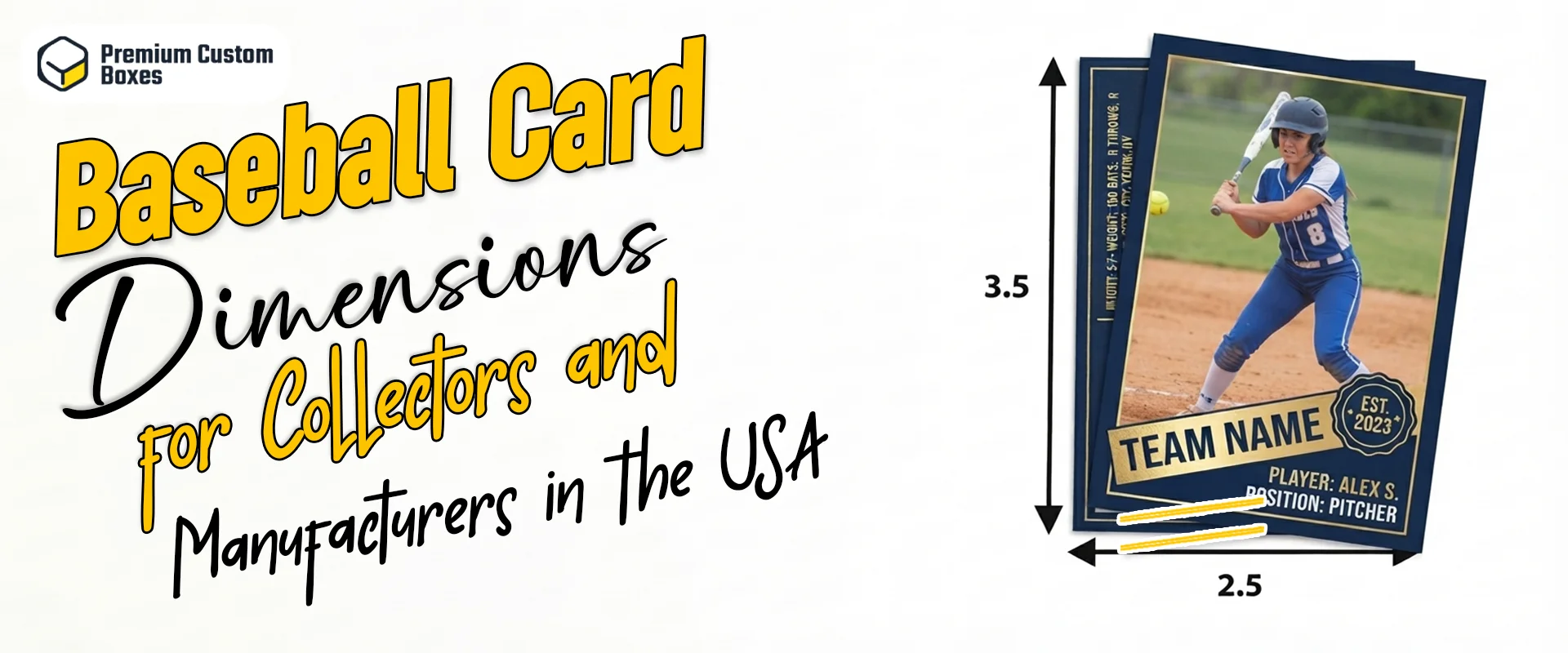
Baseball cards are still a favorite of collectors and trading card companies in the United States. The value of these cards will vary based on player popularity and the card’s authenticity. But the dimensions of the card are also significant in the areas of:
- Collecting
- Production
- Storage
- Packaging.
The right dimensions of cards are essential for Card collectors to have correct measurements to safeguard their cards. Manufacturers must adhere to uniform sizing standards for quality and to ensure consistency with packaging sleeves and display products. Differences in size can significantly impact card fit in protective packaging.
With an understanding of the standard measurements, buyers can make informed choices. It also enables manufacturers to create a card that meets the expectations of the market.
What Is The Standard Size Of A Baseball Card?
Many current trading cards made by big sports card companies have this measurement. It is also the standard size that is used for the trading cards of football to basketball, and other sports. Most modern baseball cards in the USA are the standard size of:
-
- Length: 3.5 inches
- Width: 2.5 inches
- Metric size: 63.5 × 88.9 mm
- Shape: Rectangular with rounded corners
| Feature | Standard | Specialty Card Types |
|---|---|---|
| Base sets | Vintage variations | |
| Included Content | Player statistics | Special designs |
| Storage Fit | Regular sleeves | Custom holders |
| Collector Value | Easy organization | Unique items |
| Production Benefit | Existing packaging | Special releases |
Baseball Card Measurements in Inches and Millimeters
In the USA, card sizes are frequently expressed in inches only. Millimetres offer more accuracy in manufacturing and quality control.
| Measurement | Standard Size |
|---|---|
| Width | 2.5 inches |
| Height | 3.5 inches |
| Width in mm | 63.5 mm |
| Height in mm | 88.9 mm |
| Aspect Ratio | 5:7 |
The 5:7 aspect ratio refers to the width-to-height ratio of the card. It is useful for designers to use when creating artwork, so they can avoid stretching player images or distorting logos. Manufacturers should also take into account these details, as they affect protection accessories for cards:
- Corner radius
- Trimming accuracy
- Card thicknesS
The size of collector cards is important for the following reasons:
- Sizing Benefit: Proper dimensions preserve cards and maintain collection order.
- Sleeve Protection: Correct sleeves minimize movement and reduce contaminant exposure.
- Damage Risk: Improper sizes bend cards and squeeze delicate corners.
- Collector Tip: Verify dimensions before buying accessories for vintage cards.
- Storage Convenience: Standard cards fit typical binders, boxes, and toploaders.
- Professional Grading: Graded slabs protect cards but require separate storage.
Baseball Card Thickness and Stock Options
Card thickness can be different depending on the material and special features of the card. Standard cards are thinner than autograph and memorabilia cards. Premium cards are thicker than the standard ones. Thickness is sometimes given in “points”. The unit of measure is 1 point, which is equal to 0.001 inch.
| Card Type | Approximate Thickness |
|---|---|
| Standard cards | 20–35 pt |
| Premium cards | 35–55 pt |
| Autograph cards | 35–100 pt |
| Memorabilia cards | 55–200+ pt |
The ranges mentioned in the tables are estimated or general readings. Actual thickness of cards depends on the manufacturer and the construction of the card. Cards are typically formed of paperboard bearing a printed surface and protective coating. Premium releases can be thicker and come with textured finishes. These cards also have metallic foils and multiple layers of materials. The thickness of the additions will increase and may need special holders. In memorabilia cards, you may also see:
- Jersey pieces
- Bat pieces
- Different mementos
Different Types of Baseball Cards and Their Sizes
Even though standard format is the most widely used, there are a number of different types of cards that have differing dimensions and/or thickness requirements.
Standard Trading Cards
Today, most baseball cards come in a 2 5/8″ X 3 5/8″ size. They are player cards, rookie cards, team cards, and numerous insert sets. These cards can be used in standard sleeves and traditional storage accessories.
Vintage Baseball Cards
Older baseball cards may have other sizing conventions. Certain vintage cards are shorter and slightly irregular in shape compared to contemporary cards. Before buying sleeves or holders, collectors need to check the cards for size first. Fragile corners and edges can be compromised by tight-fitting accessories.
Oversized Baseball Cards
Oversized cards are featured in promotional releases and novelty products. They differ in size depending on the release. Some may be larger than normal-size cards. These cards need to be custom slotted and displayed, or custom packaged for their dimensions.
Mini Baseball Cards
Mini cards are smaller than normal-size cards. They can be included in a special collection or as a limited edition in different sizes.
Thick Autograph and Memorabilia Cards
It is possible for autograph cards to be made from a thicker stock, meaning that the signature can be written onto and premium finishes can be used. Embedded material is allowed on memorabilia cards. They are frequently thicker than regular cards.
Choosing the Right Sleeves and Protective Holders
The selection of the correct sleeves and protective holders is critical. Selecting appropriate sleeves and protective holders is essential. Accessories to protect the condition of the cards. The proper size will depend on the dimensions and thickness of the card.
Penny Sleeves
These are thin protective sleeves for individual cards. The standard size of the sleeves is 2.5 × 3.5 inches. They give the user very limited protection against fingerprints, dust, and scratches. Collectors use penny sleeves before putting cards in top loaders.
Top Loaders
Top loaders are hard plastic containers that preserve the card from bending and handling. Typical top loaders are about 3 x 4 inches in size externally. They come in a size that’s meant for holding standard trading cards in sleeves. Premium and Memorabilia cards come in different thicknesses.
Card Savers
They were historically introduced by Cardboard Gold and are manufactured with semi-rigid plastic. These card savers are designed to protect sports and trading game cards like Pokémon and Magic: The Gathering or baseball cards.
Graded Card Slabs
To ensure cards are authenticated and graded, they are placed in sealed plastic holders by professional grading companies. The slab is considerably larger than the original playing card. It will have different sizes depending on different grading companies and different holders. The collector should buy slab storage boxes and display cases according to the box size of the collector.
Baseball Card Dimensions for Manufacturers
Manufacturers should keep the size constant during the manufacturing process. Appropriate sizing aids product quality and ensures that products are compatible with protective accessories. The standard size of 2.5″ x 3.5″ offers a familiar base. But there are some factors that need to be taken into consideration for production teams, such as:
- Trimming
- Printing
- Coating
- Finishing
Artwork and Bleed Area
Designers should ensure that artwork is created with enough bleed past the edge of the paper for the final cut. Bleed prevents unprinted edges when cards are cut. Keep important designs in the safe area, such as logos and player information. Before creating art, manufacturers should check their printer’s specifications to avoid errors.
Cutting and Trimming
If the cards need to be cut, they should be cut accurately to maintain the same size for the whole production run. Imperfect cuts can result in different-sized cards. It can also alter the shape of the corners and the sleeves. The card width and height with corner radius should be checked in production by quality control teams.
Material Thickness
The quality and the feel of the finished product are influenced by the card stock. Card manufacturers should choose the materials depending on the purpose of the card. Standard player cards can come in thinner stock, but premium inserts must be in heavier stock. Thickness must be uniform in each product series, except in instances where special types of cards are designed into each series.
Printing and Finishing
Baseball cards can be coated with a shiny lining and have other special effects. All of these features can impact surface protection and total thickness. Samples should be tested before large production and before manufacturers approve. This provides confirmation of the fit of cards in standard accessories and quality expectations.
To correctly measure the baseball cards, you need a ruler or a digital caliper.
| Card Step | Action Taken | Key Context |
|---|---|---|
| Step One | Place flat | Clean surface |
| Step Two | Measure width | Edge distance |
| Step Three | Measure height | Top bottom |
| Step Four | Measure thickness | Premium stocks |
| Step Five | Compare specs | Accessory fit |
| Safety Note | Avoid pressure | Brittle corners |
| Handling Rule | Hold edges | Valuable items |
There are a few issues that collectors and manufacturers should be conscious of when sizing. Sleeves may be similar in appearance, but have different internal dimensions.
- Choosing sleeves by appearance
- Ignoring card thickness
- Using oversized packaging
- Assuming vintage cards are standard
- Ignoring graded slabs
- Skipping production checks
Final Thoughts
The size of the baseball cards affects the collecting and storage of cards. Baseball cards’ current releases in the USA are in the 2.5″ x 3.5″ standard size. But specialty designs and graded holders have a few extra things to consider. Accurate detailing can help preserve the quality and catchiness of the cards to enhance the enjoyment of baseball card collectors. For quality and affordable custom baseball card boxes, you can contact Premium Custom Boxes. A one-stop solution for brands looking for all-inclusive packaging!
What is the standard size of a baseball card in the USA?
The standard size of baseball cards is usually 2.5 inches wide and 3.5 inches tall, or 63.5 × 88.9 mm.
Is the size of baseball cards the same as that of football cards?
The standard baseball and football trading cards share the same 2.5 × 3.5-inch dimensions. However, specialty cards may have different dimensions.
How thick is a standard baseball card?
Standard cards commonly measure around 20-35 points thick. Specialty cards may be much thicker.
What size sleeve fits a standard baseball card?
A standard trading card sleeve designed for 2.5 × 3.5-inch cards is generally suitable. Nonetheless, consider the internal size of the sleeves to avoid any sizing issues.
Do all baseball cards have the same dimensions?
No! Different cards have different dimensions, such as:
- Vintage
- Mini
- Oversized
- Autograph
- Memorabilia cards
What size box holds baseball cards?
Storage box dimensions vary by capacity and card type. Choose a box designed for standard cards or measure your cards and holders before buying.