
Mylar packaging is used in almost all industries because of its versatile nature. A wide number of products can be kept in these bags owing to their protective and layered construction. But in order to benefit from their complete potential, it is important to utilize them to their best. And this can be done by choosing the perfect size for your custom mylar bags. Keep on reading to find out the factors that matter:
What Are Mylar Bags?
The packaging that is made of specialized bags made of biaxially-oriented polyethylene terephthalate is called mylar bags. They have three layers in its structure where the middle aluminum layer and the inner layer of food safe polyethylene are preceded by the outermost BoPET layer. This structure makes it durable and lightweight at the same time. They also block light completely to ensure products remain protected from damage.
Why Size Matters For Mylar Packaging?
It is important to select the right size because it affects the shelf life of the goods and the strength of the packaging. Excessive headspace is left when the bags are way larger than their contents. This traps more air because of which the oxygen absorbers have to work harder. Due to this, the capacity of the bags is exhausted before they can reach the 0.1% oxygen threshold required for long-term safety.
Under-sized mylar bags can also hinder the desired results one expects from mylar packaging. They do not have 3-4 inches of headspace which creates folds in the Mylar, creating tiny channels where air can slowly leak back in over time. There are three main factors that are considered to be the benchmark when it comes to selecting the best size for your customised Mylar bags. These include:
- Product safety
- Maximizing space
- Make it budget-friendly
Understanding Standard Mylar Bag Sizes
For custom mylar bags in the USA, the weight and the volumetric capacity of the goods are the main yardsticks that are used to categorize mylar bags. These factors are also important because they ensure there is enough physical area to accommodate the products and headspace for the seal.
Small Sizes
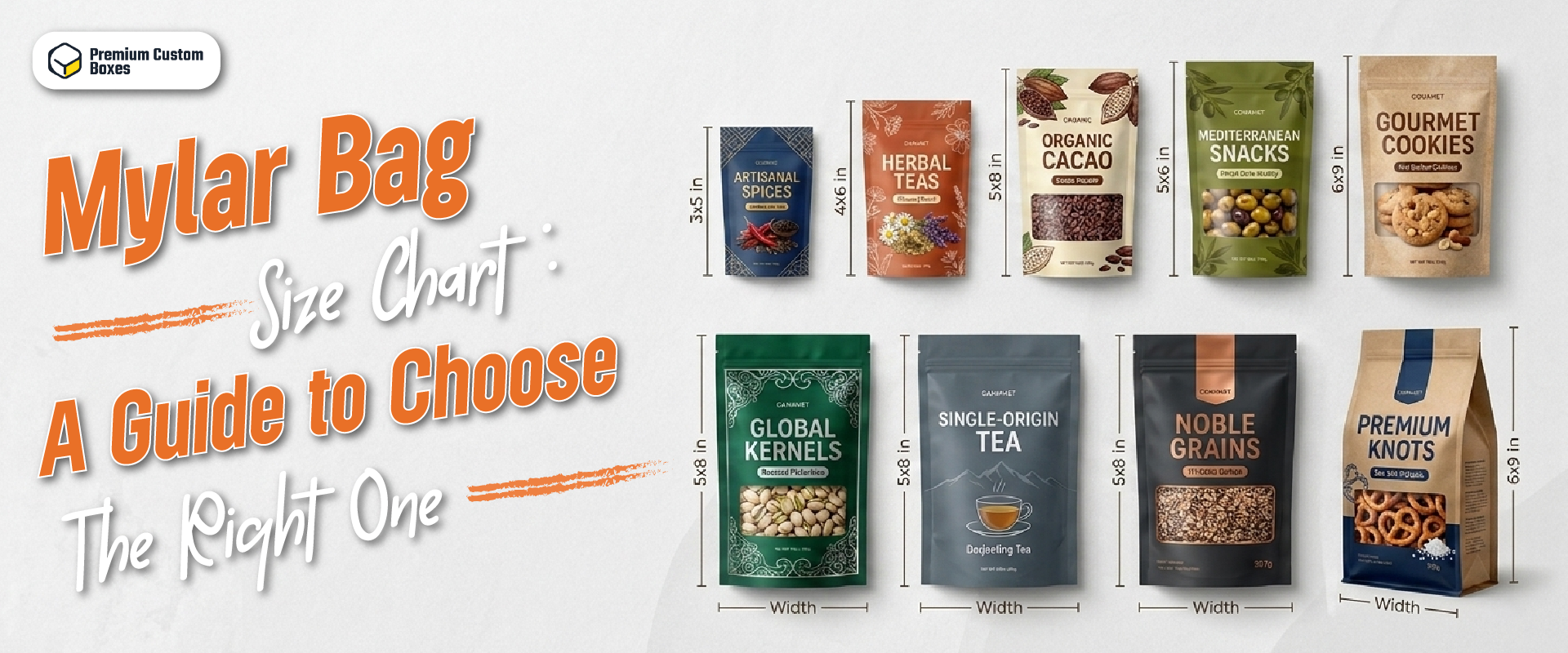
The small mylar bags range from 3”x4” to 6”x9,” and they can be used for packaging quantities between 1g and 1oz. These bags are usually used for retail sampling of small items in less quantity. The oxygen absorbers must be between 50cc and 100cc for these bags to ensure all the trapped air is removed effectively to protect the products from oxidation.
Medium Sizes
This is the most common option for the custom spout pouches. These bags can hold weights of up to 4oz to 1lb. They measure between 8″ x 10″ and 13″ x 15″ which makes them perfect for food items that are used in everyday lives. The air can be neutralized within the bag’s headspace by using oxygen absorbers of 100cc and 300cc.
Large Sizes
The sizes mostly used in bulk are for bags designed for large storage. They vary between 1 gallon (10″ x 14″) and 5 gallons (20″ x 30″). These are the go-to choices for long-term use because of their ability to protect massive amounts of products. They require much higher-capacity oxygen absorbers, generally between 500cc and 2000cc because of the significant volume of air trapped in these larger bags to ensure the environment remains oxygen-free
Mylar Bag Size & Capacity Chart
The selection of size is easier when there is a reference to match the product weight to the bag dimensions. Exact capacity can vary based on the product’s density but more or less different sizes are suitable for a particular kind of product.
| Product Weight | Bag Size | Common Uses |
| 1g – 3.5g | 3″ x 4″ | Samples and herbs |
| 3.5g – 7g | 3.5″ x 5″ | Tea, small portions, supplements |
| 14g – 28g | 4″ x 6″ | Snacks, dried spice powders |
| 1oz – 4oz | 5″ x 8″ | Coffee, tea, and nuts |
| 8oz – 1lb | 6″ x 9″ | Staples like grains and flour |
| 1lb – 2lb | 7″ x 10″ | Rice, beans, bulk snacks |
| 3lb – 5lb | 10″ x 14″ | Bulk dry foods |
| 5lb+ | 13″ x 15″ | Large storage for long-term supplies |
Internal vs External Dimensions
The size listed on a Mylar bag refers to its outer measurement of custom printed mylar bags and not the actual usable space inside. Side seals and bottom gussets reduce the internal capacity. Each side seal can take up around 0.25 to 0.5 inches. The bottom gusseted bags also lose a bit more space but they also expand to cover it up.
Choose The Right Thickness For Your Mylars
The unit used for measuring the mylar bags is the mil. A mil is equal to one thousandth of an inch to ensure that the thin film of the mylar is measured precisely. The thickness of the bags is an important factor in determining the shelf life and durability of your stored goods.
Short-Term Storage
The die cut mylar bags in the 3.5 to 4 mil range are best for everyday storage that is designed to be used for a short span of time. They are light and flexible due to which they are easily handlable. These bags work well for items that will be used within a few months which is why they are a good choice for retail packaging where appearance and convenience matter for increasing sales. However, despite their excellent light-blocking properties, they are handy for rough usage because they might tear upon contact with sharp objects.
Long-Term Food Storage
Mylar bags with a thickness of 5 to 6 mil are the most popular choice for long-term storage. They provide a strong barrier against air or light to help preserve food for years when used with oxygen absorbers. These bags are durable enough to resist small punctures which is why they are the go-to option for bulk items.
Heavy Duty
Bags that are 7 mil or thicker are designed for maximum strength and protection. They also hold their shape better when bulky items are placed into them even in harsh environments. These features all make it a comparatively expensive option, but it guarantees exceptional results when durability is a top priority.
How To Calculate The Right Size For Your Product
There are different aspects that need to be considered when it comes to choosing the most suitable sizing for the mylar bags that can meet the product requirements without compromising on the appearance of the packaging. These include:
Weight vs Volume
Multiple products occupy different amounts of space even if they weigh the same. This makes volume an important aspect that plays an important role. You will need a larger bag than the weight if your product is light or irregular in shape. On the contrary, dense items allow you to use a more compact size.
Calculating Headspaces
There is an empty area left at the top of the bag before sealing. This is called the headspace. It is essential for proper closure to ensure preservation because without them the seal may be weak with time. Usually, it is better to leave at least 1 to 2 inches of space above your product. This area allows you to:
- Apply a clean heat seal
- Insert oxygen absorbers if needed
- Prevent pressure on the seams
Volumetric Math
You can use the simple calculation (L x W x H) for custom shaped mylar bags to get the total capacity. The height is flexible and depends on how much the bag expands when filled for flat bags. Gusseted bags have more defined depth, which increases usable volume.
Sizing Your Absorbers
Oxygen absorbers should match the internal volume of the bag rather than just the weight of the product. Larger bags require higher capacity absorbers to remove trapped oxygen effectively and vice versa. Using the correct absorber size helps in extending the shelf life by preventing spoilage.
Conclusion
There are multiple factors that come into play when it comes to choosing the best dimensions for your. If you are a brand that is in search of a trusted mylar bag manufacturer, then Premium Custom Boxes is the best option for you in the USA. We offer a wide range of mylar bags personalized according to your product size and branding needs. You can order both small and bulk orders from our company to stand out from the competitors by giving the products to the customers in the best form in accurate packaging.