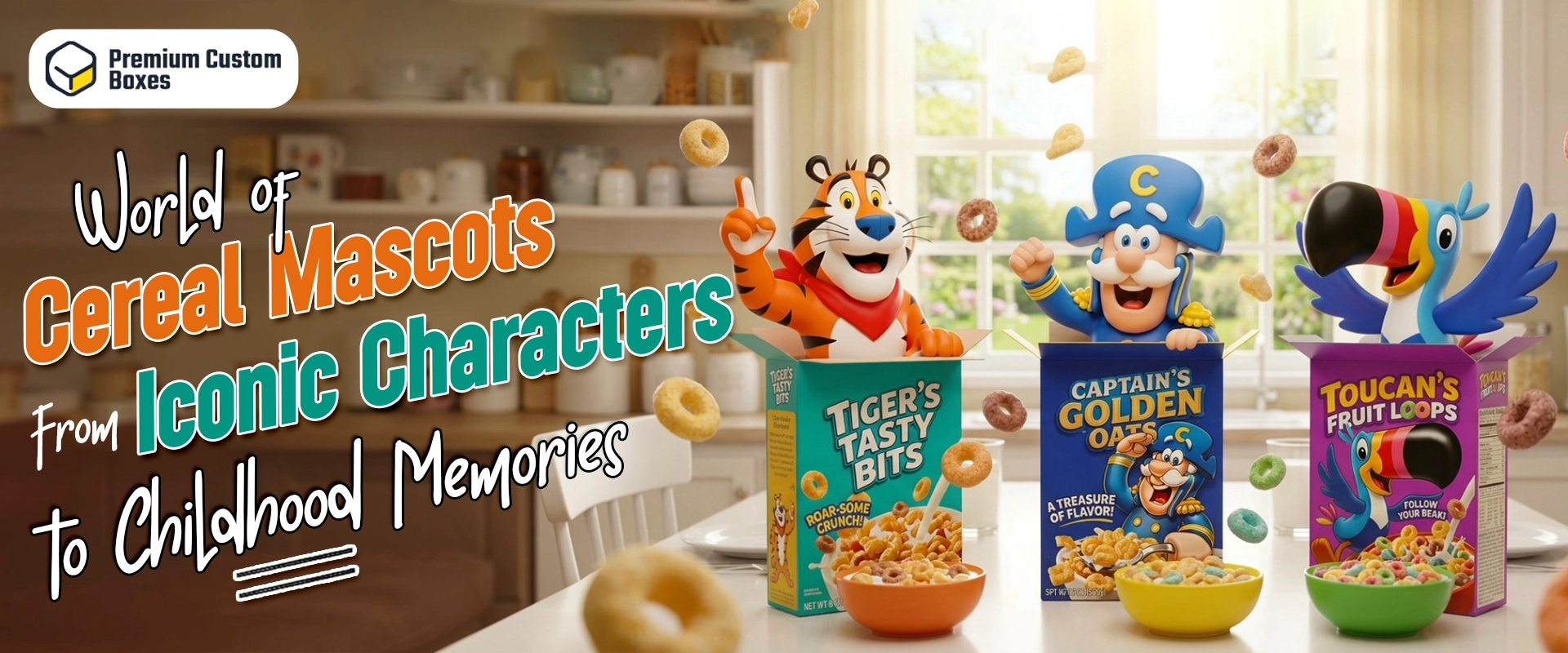
Read how a tiger, a rabbit, and a leprechaun turned breakfast into one of the most powerful marketing phenomena in history.
Picture a Sunday morning in the 1980s or 90s. A morning when you are wearing pajamas and watching a cartoon on TV. On the kitchen table, there is a bright cereal box placed. Tony Tiger and Trix Rabbit or maybe Cap’n Crunch, are staring back at you from the box. Those characters are feeling so vivid and familiar that they felt like old friends. Cereal mascots are merely a market tool. They were, and they are a cultural artifact. The characters are an anchor of childhood emotion, with enduring characters designed in advertising history. Cereals mascots remained an animated brand ambassador for more than seven decades. These characters have shaped what millions of children eat for breakfast and how they remember growing up.
Where It All Began
Breakfast cereals themselves are a modern invention. Dr. John Harvey Kellogg introduced corn flakes in the 1890s as a health food. For decades, cereals were marketed to adults using medical authority and not cartoon animals. All this was changed after World War II.
This is because the post-baby boom created a massive market of children. Children had a real influence over family purchases, and television gave brands a direct pipeline into the living rooms across America. The result was an explosion of cereal mascots that began in the early 1950s and had permanently transformed the breakfast aisle. By the late 1960s, nearly every major cereal brand had a character. The breakfast table had become a zoo.
The Icons Who Defined A Generation
Certain icons on custom cereal boxes immediately create recognition among people. Those icons have defined a generation, such as:
Tony The Tiger
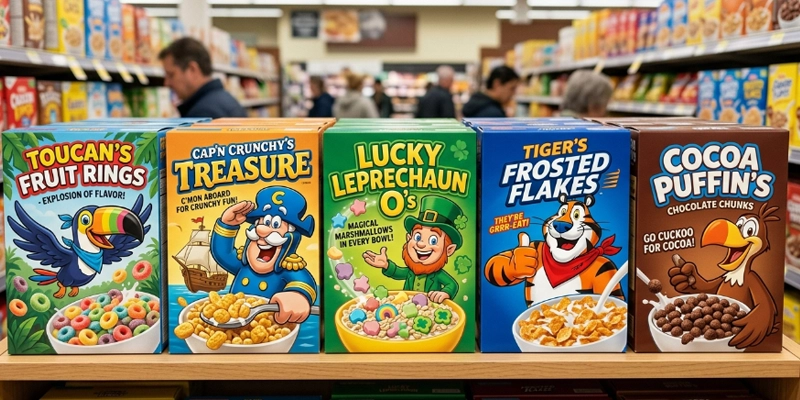
It debuted in 1952 for Kellogg’s Frosted Flakes and is the greatest cereal mascot ever created. The genius of Tony the Tiger is an inspiration. He does not just cereal, but he wins. He coaches kids and plays basketball by embodying peak performance. “They’re Gr-r-reat!” became one of the most recognized slogans in advertising history. In over 70 years, Tony has never left the public consciousness.
The Trix Rabbit
Trix was introduced in 1959 and is one of the most emotionally complex mascots in cereal history. His entire existence is defined by desire and denial. Trix schemes and disguises himself. He comes heartbreakingly close to tasting Trix cereal. But he was foiled by children who reminded him: “Silly rabbit, Trix are for kids!”
In 1980, General Mills ran a nationwide consumer vote to decide whether the Rabbit should finally get his cereal. Trix won, but the denial was reinstated anyway. The loop continues to this day.
Cap’n Crunch
Cap’n Crunch was an adult who was an authoritative and seafaring character. He was launched in 1963 and was selling sugar cereal for children. World-building made him work. Cap’n Horatio Magellan Crunch was commanding a ship called the S.S. Guppy had a pirate enemy, Jean LaFoote. He presided over a genuine lore long ago that brands ever thought strategically about narrative universes. The introduction of Cap’n Crunch made children not just buy cereals but to join an adventure.
Snap, Crackle & Pop
They are the longest-running mascots in cereal history and originated in 1933. Snap, Crackle and Pop had a brilliantly simple premise: they were the sound of the cereals. Their international adaptation in Germany and Mexico revealed how universally effective and sensory marketing can promote a brand.
Toucan Sam
He was a masterpiece of integrated design. A toucan with a rainbow beak was selling colourful fruit-flavored cereals. He was guided by the slogan “Follow your nose, it always knows. The anatomy of the character was directly tied to product benefit, and we readvertising logic perfected into personality.
Lucky the Leprechaun
It was introduced in 1964 and flipped the Trix dynamic. Here, the children chase the mascot. Lucky’s magical marshmallow shapes were carefully evolved over decades, with new additions that generate real consumer excitement. Lucky demonstrated how a mascot and a product can innovate together rather than separately.
Count Chocula, Franken Berry and Boo Berry
In 1971, General Mills Monster Cereals were introduced. They occupied a different cultural niche entirely. Count Chocula, Franken Berry and Boo Berry were affectionately scary and were released seasonally. These mascots became cult items because of their scarcity. Adults who grew up eating Count Chocula now pay premium prices for vintage cereal packaging boxes. Devoted enthusiasts track the release dates of annual Monster Cereal. Their characters were far beyond marketing that transcended into a ritual.
Why Mascots Work
The efficiency of the mascot is not accidental. Designing cereal packaging with a mascot was a well-understood psychological principle. Children form genuine bonds with the characters and trust mascots as they trust recommendations from a friend. Repeated exposure across TV commercials and promotional materials creates a parasocial family. This is the feeling of knowing someone you have never actually met.
Mascots with storylines and adversaries generate narrative investment. When a child sees the Trix Rabbit on a shelf, they bring an entire story with them. The cereal inherits that emotional richness.
The Nostalgia Economy
Nostalgia is one of the most powerful emotions that we can see in consumer marketing. It creates a psychological link to feelings of social connectedness. Cereal Mascots are among the most effective nostalgia triggers ever created by a brand. When an adult sees Tony the Tiger on a grocery shelf. He does not just see a cereal box, but he sees a flash of Saturday morning. A morning when the world feels uncomplicated.
Controversies Worth Knowing
No honest discussion of cereal mascots can skip the ethical debate surrounding them. Critics have long argued that using appealing cartoon characters to market nutritionally poor food to children is inherently manipulative, including:
- Pediatricians
- Nutritionists
- Regulatory bodies worldwide
Children under roughly age 8 have a limited capacity to recognize persuasive intent in advertising. They process mascot endorsements as genuine recommendations from trusted friends. Some countries have implemented restrictions on using cartoon characters to market unhealthy foods to children, such as:
- The United Kingdom
- Sweden
- Norway
- Canada
The United States relies on voluntary industry guidelines. Critics consider the voluntary guidelines insufficient.
Besides this, Mascot redesigns have generated their own controversies. Toucan Sam’s 2020 modernization sparked petitions and social media backlash. This backlash was significant enough that Kellogg’s partially reversed it. It demonstrated the practical business consequences of disrupting nostalgia. When people push back on a mascot redesign, they are defending their own childhood in a real sense.
What Makes A Mascot Immortal
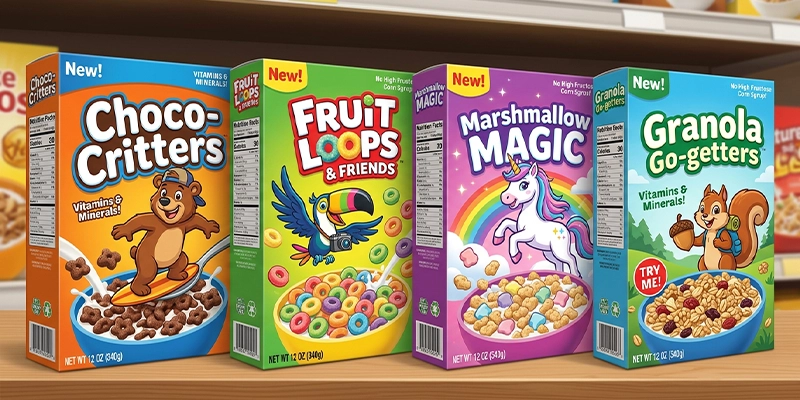
After seven decades of cereal mascot history, the formula for enduring characters is reasonably clear. Some of the reasons that make the mascot immortal are as follows:
| Mascot Element | Core Trait | Brand Purpose | Consumer Impact | Marketing Value |
| Strong Personality | Single Character | Instant Recognition | Easy Recall | Brand Memory |
| Narrative Tension | Clear Desire | Ongoing Engagement | Emotional Connection | Lasting Interest |
| Product Integration | Logical Relationship | Message Alignment | Better Understanding | Strong Association |
| Visual Simplicity | Bold Design | Quick Recognition | Fast Identification | Shelf Visibility |
| Expressive Features | Large Eyes | Character Appeal | Audience Attraction | Brand Affinity |
| Distinct Colors | Bright Palette | Visual Differentiation | Easy Recognition | Market Presence |
| Simple Silhouette | Clear Shape | Memory Encoding | Instant Recall | Logo Consistency |
Conclusion
Cereal mascots began as an advertising campaign and became something genuinely larger. It has shared cultural touchstones that span generations and a wide demography. Their widespread success shows how effective marketing plays a role in a brand’s success. From digital media to print media, both go hand in hand to give a brand exceptional promotion. You can work on your digital marketing strategy and get help from Premium Custom Boxes for your printed cereal boxes marketing.
Tony the Tiger is still Gr-r-reat. The Trix Rabbit still hasn’t gotten his cereal. And somewhere right now, a child is eating breakfast in the quiet company of a cartoon character. Who feels like a friend. That’s a remarkable thing to accomplish from a cardboard box.